
 A step-by-step checklist to help parents pick the right school for 2027–28 admissions
How to Choose a CBSE School in Kochi: A Simple Guide for Parents (2027)
Choosing a CBSE school in Kochi is about more than comparing classrooms, facilities or examination results. It is about finding a place where your child can learn well, develop strong values, discover talents and gain the confidence to face a changing world. As you explore schools for the 2026–27 academic year, consider how each school balances academic learning with life skills, practical experiences, technology and personal growth.
At Parama Bhattara Kendriya Vidyalayam (PBKV), Vadayampady, education is viewed as a journey that connects knowledge with character. A meaningful education respects traditional values and cultural roots while encouraging students to become open-minded, responsible and globally aware learners.
Why This Decision Deserves Time
- Your child will spend a significant part of the day at school, and the experiences gained there can shape their habits, friendships, confidence and outlook on life. A school should help children understand their subjects, but it should also encourage curiosity, kindness, responsibility and respect for others.
- A strong educational foundation brings together academic development, traditional values and the skills needed for the future. Look for an environment where children are encouraged to ask questions, work with others, express ideas, solve problems and learn from experience. Taking time to understand a school's approach can help you make a thoughtful decision.
Step 1: Confirm the CBSE Affiliation
- Start with the essential detail: verify that the school has a valid CBSE affiliation. Ask the school for its affiliation number and validity period, and check the details through CBSE's official SARAS affiliation records. You can also ask whether the school is affiliated up to the secondary or senior secondary level, especially if you would like your child to continue through Class 12 in the same school.
- Along with affiliation, understand the school's educational vision. Ask how it aims to support students not only in academics but also in character development, confidence, responsibility and readiness for life beyond school.
Step 2: Look at the Curriculum and Medium of Instruction
- CBSE follows a national curriculum, which can offer continuity for families who may move between cities. Confirm the medium of instruction and understand how the school supports children in developing reading, writing, speaking and comprehension skills from the early classes.
- Also ask how learning connects with the world beyond textbooks. Children benefit when classroom concepts are linked to real situations, activities and examples. A balanced education can help students appreciate their cultural heritage and traditional values while developing awareness of different people, communities and global perspectives.
- A global outlook does not mean leaving one's roots behind. It means learning to respect one's own culture while being open to different ideas, traditions and ways of life.
Step 3: Understand How Teaching Works
- Ask how lessons are conducted, how teachers understand each child's progress and how students are encouraged to participate. Good teaching should make room for questions, discussion, creativity and practical application—not only memorising information.
- A few useful questions to ask:
- How often do teachers update parents on a child's progress?
- What support is available for children who need additional help or learn at a different pace?
- How are students encouraged to communicate, collaborate and express their ideas?
- Do children get opportunities to participate in projects, experiments and hands-on activities?
- How are critical thinking, creativity, teamwork and problem-solving developed?
- How does the school help students use technology responsibly and productively?
Learning Life Skills Alongside Academics
Communication, teamwork, leadership, decision-making, empathy and adaptability are important skills for everyday life. Students develop these abilities when they take part in group activities, presentations, school responsibilities, creative tasks and collaborative projects. These experiences help children become more confident and responsible, while learning to respect the ideas and contributions of others.
Technology for Positive Change
- Technology has an important place in modern education when it is used with purpose. Exposure to coding, robotics, electronics and artificial intelligence can encourage logical thinking, creativity and problem-solving. Students should be guided to see technology not merely as something to use, but as a tool that can help understand problems and develop useful solutions.
- Ask how students get opportunities to explore, design, build, test and improve their ideas. Hands-on experiences make learning meaningful: children learn by doing, discover why something works or does not work, and gain confidence through the process of improvement. Responsible digital habits, safety and ethical use of technology are equally important.
Step 4: Check Safety, Facilities and the Learning Environment
- Walk around the campus and notice the everyday details. Are classrooms clean, bright and welcoming? Are playground activities supervised? Are drinking water and sanitation facilities properly maintained? Ask to see the library, laboratories, computer facilities, activity spaces and play areas rather than relying only on a facilities list.
- Facilities matter most when students get meaningful opportunities to use them. A laboratory should support exploration, a library should encourage reading and discovery, and technology spaces should help students create and experiment. Ask how practical learning is included in the school routine.
- A positive school environment should also encourage respect, discipline, inclusion and care for the community. These everyday experiences help traditional values become part of a child's actions and choices.
Step 5: Think About Location and Daily Travel
- Distance on a map does not always reflect the time needed for the daily journey. Traffic conditions and routes around Kochi and Ernakulam can vary, so consider travelling at the actual school start and closing times.
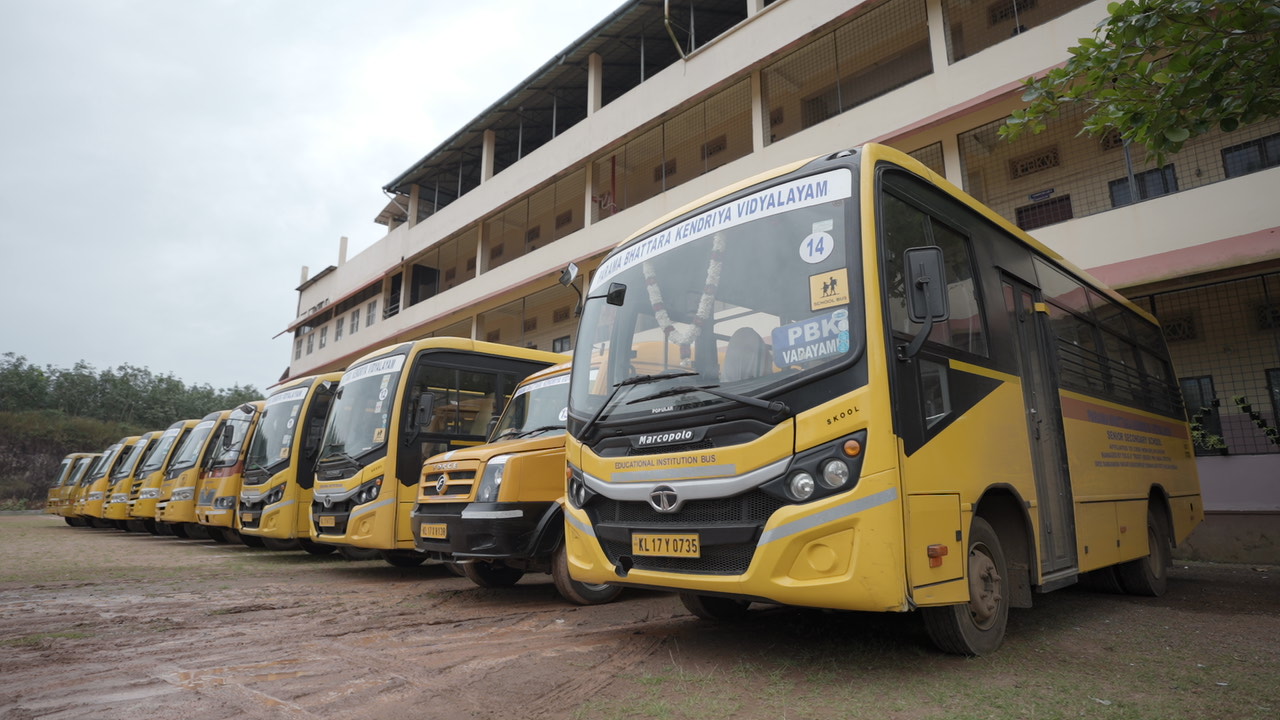
- If transport is important to your family, ask the school about available routes, pick-up points and current arrangements for your area. A practical daily routine can help children arrive at school comfortably and participate fully in learning and activities.
Step 6: Understand the Admission Process
- Whether you are enquiring about KG admission in Kochi or admission to a higher class, requirements and availability may change from year to year. Contact the school office and confirm:
- • Which classes have vacancies for the current admission year?
- • What is the age requirement for the class?
- • Which documents should parents submit?
- • What are the application steps and important dates?
- • Can parents arrange a campus visit or speak with the school about its learning approach?
- Start your enquiry early and check the latest information directly with the school. Do not rely on admission dates or requirements from an earlier academic year.
Step 7: Visit the School and Ask Questions
- A campus visit gives you an opportunity to understand the school's atmosphere. Notice how students interact with one another, how staff communicate with children and whether learners appear engaged in their activities. Ask to see examples of student work, practical projects, classroom activities and opportunities for participation.
- You may also ask how the school helps children develop confidence, leadership, communication and social responsibility. Find out how traditional values are encouraged in everyday school life and how students are prepared to understand a wider, changing world.
- Use the same list of questions for every school you visit. It makes comparisons easier and helps you focus on what matters to your child.
What About the “Best CBSE School in Kochi”?
- Many parents search online for the best CBSE school in Kochi. Rankings and online lists can be a starting point, but they may use different criteria and cannot tell you which environment is right for your child.
- The right school is one that supports your child's learning, interests and well-being. Look beyond academic claims and understand how the school builds character, develops life skills, encourages hands-on learning and uses technology for positive purposes. A school that respects traditional values while nurturing global awareness can help children grow with a strong sense of identity and an open mind.
Frequently Asked Questions
- How do I check if a school in Kochi is CBSE affiliated?
- Ask the school for its affiliation number and validity period, then verify the information through CBSE's official SARAS affiliation records.
- Does a CBSE school always teach in English?
- Not necessarily. Confirm the medium of instruction directly with the school, including how language skills are supported in the early classes.
- When should I start looking for KG admission?
- Start enquiring a few months before the new academic session. Admission schedules and age requirements can vary, so check the current details with each school.
- How many schools should I visit before deciding?
- Visiting two to four schools can give you a useful basis for comparison. Focus on the quality of the learning environment and how well it suits your child.
- Is a school with classes from KG to Class 12 better?
- Not automatically. Continuity can be helpful, but the right choice depends on the school's educational approach, student support and your child's needs.
- Why are life skills important in school education?
- Life skills such as communication, teamwork, leadership, critical thinking, empathy and decision-making help children apply what they learn in everyday situations and prepare for future responsibilities.
- Why is hands-on learning important for children?
- Practical activities, experiments and projects help students connect ideas with real experiences. They encourage curiosity, creativity, problem-solving and confidence.
- How can technology support positive learning?
- When used responsibly, coding, robotics and other digital tools can help students develop logical thinking, creativity and the ability to explore solutions to real-world problems.
- What should I carry when I visit a school?
- You may carry your child's birth certificate and previous school records if relevant. Prepare your questions in advance and ask the school which documents are required for the current admission process.
Take the Next Step
- If you are looking for a CBSE school in Kochi or Ernakulam that values academic learning, character development and preparation for the future, consider learning more about Parama Bhattara Kendriya Vidyalayam (PBKV). Located at Vadayampady, PBKV is a CBSE-affiliated, English-medium school where parents can enquire about the school's educational approach, student activities, facilities and admission details.
- Discover an educational journey that values strong roots, encourages practical learning and helps children grow into thoughtful, capable and responsible individuals.

PBKV Vidyalayam
Sharing school news, educational insights, student achievements and learning experiences.